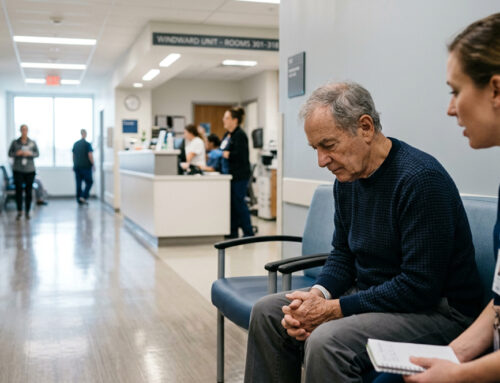


Most patients walk into their first integrative oncology consultation expecting it to feel like a typical specialist appointment: a short intake, a few questions, and a recommendation. In practice, the first visit tends to be longer and more detailed than patients anticipate, largely because the goal is to build a complete picture of a patient’s diagnosis, current treatment plan, and overall health before any complementary services are discussed.
Knowing what to expect ahead of time makes the visit far less overwhelming, especially for patients who are already managing the stress of an active cancer diagnosis.
Why the First Visit Is Longer Than a Typical Oncology Appointment
An initial integrative oncology consultation usually involves a detailed review of a patient’s full medical history, current treatment plan, recent labs and imaging, and any prior testing such as genomic or chemosensitivity panels. This isn’t a duplication of what a patient’s primary oncologist already knows. It’s meant to give the integrative care team enough context to recommend complementary services, such as nutritional support or stress management coaching, that genuinely fit a patient’s existing treatment rather than working around it.
Patients often assume this level of detail is unusual, but it reflects a core principle of integrative oncology: complementary care only works well when it’s built around, not separate from, the primary treatment plan.
What to Bring to Your First Appointment
A little preparation goes a long way toward making the first visit more productive:
- Recent pathology reports and imaging results
- A current list of all medications and supplements, including over-the-counter products
- Contact information for your primary oncologist or oncology team
- Any prior genomic or chemosensitivity testing results
- A written list of questions or concerns, since it’s easy to forget them once the conversation starts
Patients who bring this information tend to leave the first visit with a clearer, more specific plan rather than a general overview.
How the Consultation Typically Unfolds
| Stage | What Happens |
|---|---|
| Intake and history review | Detailed discussion of diagnosis, treatment history, and current symptoms |
| Records review | Care team reviews labs, imaging, pathology, and any existing genomic testing |
| Goals conversation | Patient shares priorities: symptom relief, quality of life, second opinion, or specific services |
| Recommendations | Care team outlines which complementary services may be appropriate, and why |
| Coordination discussion | Plan for communicating with the patient’s primary oncology team |
This structure is fairly consistent across most integrative oncology consultations, though the specific services discussed will vary based on diagnosis, treatment stage, and patient goals.
What an Integrative Oncology Center Will Not Do
It’s worth being direct about this, since it’s one of the most common misconceptions. A reputable integrative oncology center will not suggest replacing chemotherapy, radiation, or surgery recommended by a patient’s primary oncologist. Complementary services, including genomic testing, low-dose chemotherapy approaches, nutritional support, and lifestyle coaching, are designed to work alongside conventional treatment, not instead of it. Any recommendation that suggests otherwise should be treated as a red flag, and patients should always loop in their primary oncology team on any new complementary treatment being considered.
An Overlooked Detail: Coordination With Your Existing Care Team
One thing many patients don’t expect is how much of the first visit is spent discussing communication logistics, not just treatment options. A well-run integrative oncology practice will typically ask for permission to request records directly from a patient’s primary oncologist and will often follow up with that oncology team after the consultation. This coordination step is frequently the difference between complementary care that genuinely supports a treatment plan and complementary care that operates in an information vacuum, which is a distinction rarely discussed outside clinical circles.
Frequently Asked Questions
Do I need a referral to see an integrative oncology center? In most cases, no referral is required to schedule an initial consultation, though it’s helpful to bring your existing medical records and the contact information for your primary oncology team so the visit can be as productive as possible.
Will my primary oncologist be involved in the integrative care plan? Yes, ideally. Integrative oncology is designed to complement, not replace, the plan set by your primary oncology team, and most practices, including Forsythe Cancer Care Center, coordinate directly with that team when appropriate and with patient consent.
How long does a first visit typically take? First visits are usually longer than a standard specialist appointment, often ranging from 60 to 90 minutes, since the goal is to review a complete medical picture before making any recommendations.
What if I’m still deciding on a conventional treatment plan? That’s a common reason patients seek an integrative second opinion. The consultation can help clarify options and questions to bring back to your primary oncology team, without pressure to commit to any specific service on the first visit.
Is a first visit covered by insurance? Coverage varies by plan. Many practices can provide an estimate of what’s typically covered before your appointment, and it’s worth confirming directly with your insurance provider as well.
Conclusion
The first visit to an integrative oncology center is less about starting new treatments immediately and more about building a complete, coordinated picture of a patient’s diagnosis and goals. Forsythe Cancer Care Center in Reno, NV structures every first visit around that principle, working alongside each patient’s existing oncology team rather than in place of it. If you’re considering an integrative consultation, call (775) 827-0707 to schedule your first visit.
This content is for educational purposes only and does not constitute medical advice. It is not a substitute for professional medical consultation, diagnosis, or treatment, and does not replace the relationship between a patient and their physician or oncology care team.